



Interdisciplinary machine learning education
by Prof. Dr. Christoph Weisser & Dr. Knut Zoch
bridgingaiandsociety.org · Courses · About us · Teaching materials · Editions · Get involved
5 editions · 4 countries · since 2019 · 24 open notebooks, MIT-licensed
We are Prof. Dr. Christoph Weisser and Dr. Knut Zoch, two educators with backgrounds in applied statistics and experimental physics. Together, we design and teach interdisciplinary courses and workshops that explore both the technical foundations of machine learning and the societal questions raised by artificial intelligence.
AI and machine learning education should not remain the domain of specialists alone.
Our formats are interactive, adaptable, and discussion-driven — ranging from short workshops to multi-day academies. Materials are modular and tailored for learners from diverse academic backgrounds — no coding experience required.
This organisation hosts the open teaching materials behind those courses. Course editions, curriculum, and everything else live at bridgingaiandsociety.org.
Start here. Two repositories, 24 notebooks, MIT-licensed and free to fork for your own teaching. Everything opens straight in Google Colab — nothing to install, no data files to download. Together they form one learning path: begin with Python and the data science toolkit, then work through the machine learning models notebook by notebook, up to LLMs, retrieval, and agents.
| Repository | What it is | Level | Time | Launch |
|---|---|---|---|---|
| Python-for-Data-Science-Workshop | Python and data science from scratch, in two tracks | Beginner → Intermediate | 90 min live · ~10–13 h self-paced |  |
| Hands-On-Notebooks | Machine learning models, from decision trees to LLM agents | Beginner | ~3 hours | |
Python-for-Data-Science-Workshop — from "What's a variable?" to building and interpreting your own ML models
- A beginner-friendly Python course built around data science and AI applications — no prerequisites, just a browser and curiosity.
- Track 1 — live introduction (90 minutes, 5 notebooks): the common foundation for a whole cohort — syntax, variables, data structures, control flow, functions, and first steps with pandas. Ships with a session plan, per-notebook timings, and instructor notes.
- Track 2 — self-paced deep dive (14 notebooks, ~10–13 hours): every Track 1 topic again in detail, then NumPy, pandas, data cleaning, matplotlib, exploratory data analysis, machine learning basics, the scikit-learn workflow, PyTorch, and a capstone project.
- Colab-first by design: every notebook runs top to bottom without errors, and the "Debug me 🐞" exercises stay safely commented out until you deliberately break them.
- Also included: a Python data science cheat sheet, a requirements file, and a setup script for virtual environments and Jupyter.
Hands-On-Notebooks — a curated collection of Jupyter notebooks, from the fundamentals of machine learning to LLMs, RAG, and agents
- Five notebooks: an environment check, machine learning fundamentals, decision trees, neural networks, and modern AI — large language models, retrieval-augmented generation, and agents.
- Emphasises visual intuition, experimentation, and interpretability — decision boundaries, loss landscapes, and training dynamics you can watch, with plotting helpers doing the heavy lifting.
- Colab-compatible — just click and run, no installation required. For local work, there are Anaconda, Docker, and virtual-environment instructions, plus a Docker image rebuilt in CI on every push to
main. - The modern-AI notebook can optionally call a real language model, to hold against the toy model built in the notebook. Bring an API key via
.envor a Colab secret — without one, those few cells simply step aside.
| Edition | Where | Year | Status |
|---|---|---|---|
| Obertauern 2026 | 🇦🇹 Obertauern, Austrian Alps | 2026 | Upcoming |
| Banz Abbey 2025 | 🇩🇪 Banz Abbey, Germany | 2025 | Completed |
| Ljubljana 2024 | 🇸🇮 Ljubljana, Slovenia | 2024 | Completed |
| Koppelsberg 2021 | 🇩🇪 Koppelsberg, Germany | 2021 | Completed |
| Cambridge 2019 | 🇬🇧 St. John's College, Cambridge | 2019 | Completed |
Obertauern 2026 is part of the summer academy programme of the Studienstiftung des Deutschen Volkes. Ljubljana 2024 ran in partnership with the Max Weber Program.
Next up: Obertauern 2026 — bridging classical machine learning with recent breakthroughs in generative AI and autonomous systems, including LLMs and agents; the same ground the final Hands-On notebook covers in code.
The exact content of each course depends on the audience and duration, but typically spans core ML concepts, hands-on data work in Python, and discussion sessions on topics such as algorithmic bias and fairness, global regulation, AI in healthcare, misinformation, and the future of work.
A recommender system built by participants during the Banz Abbey 2025 school.
- A full-stack web application for running beer preference studies with real-time data collection and analysis.
- Participants collected their own dataset from the group, then trained and evaluated a recommender on it — the full pipeline, end to end.
- TypeScript frontend with a Python backend; forked from robert-scr/Beer-ML.
- Accessibility — machine learning made approachable for participants from diverse academic backgrounds, introduced with clarity and intuition rather than assumed prior knowledge.
- Active learning — interaction, experimentation, and discussion instead of passive lectures, with participants bringing perspectives from their own fields.
- Societal perspective — technical ideas always connected to the ethical, legal, and societal implications of AI.

Prof. Dr. Christoph Weisser Professor of Mathematics, in particular Business Data Science HSBI Ph.D. in applied statistics Research: applied statistics and data science, forecasting, agentic systems Passionate about teaching and business data science ✉️ Email · Connect on LinkedIn |
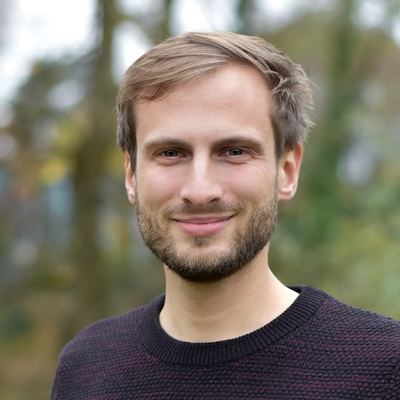
Dr. Knut Zoch Physicist, Research Fellow CERN Ph.D. in experimental particle physics Research: big data analytics at CERN, machine learning for science Passionate about teaching and interdisciplinary science ✉️ Email · Connect on LinkedIn |
We look forward to learning and exploring with you!
We welcome collaboration and feedback.
- Teach with our materials — everything here is MIT-licensed: fork it, adapt it, run it in your own courses. A link back is appreciated, never required.
- Spotted an issue? Open an issue or pull request in the relevant repository — corrections from people actually teaching this material are the most useful feedback we get.
- Interested in a course or workshop? Visit bridgingaiandsociety.org or get in touch with us.
© Christoph Weisser & Knut Zoch · bridgingaiandsociety.org