What happens
/profile displays Username, Display Name, Office, Email and Roles as static text. It has zero interactive elements:
document.querySelector('main').querySelectorAll('button, a, ion-button, input, ion-input, select, [role="button"]')
// → length: 0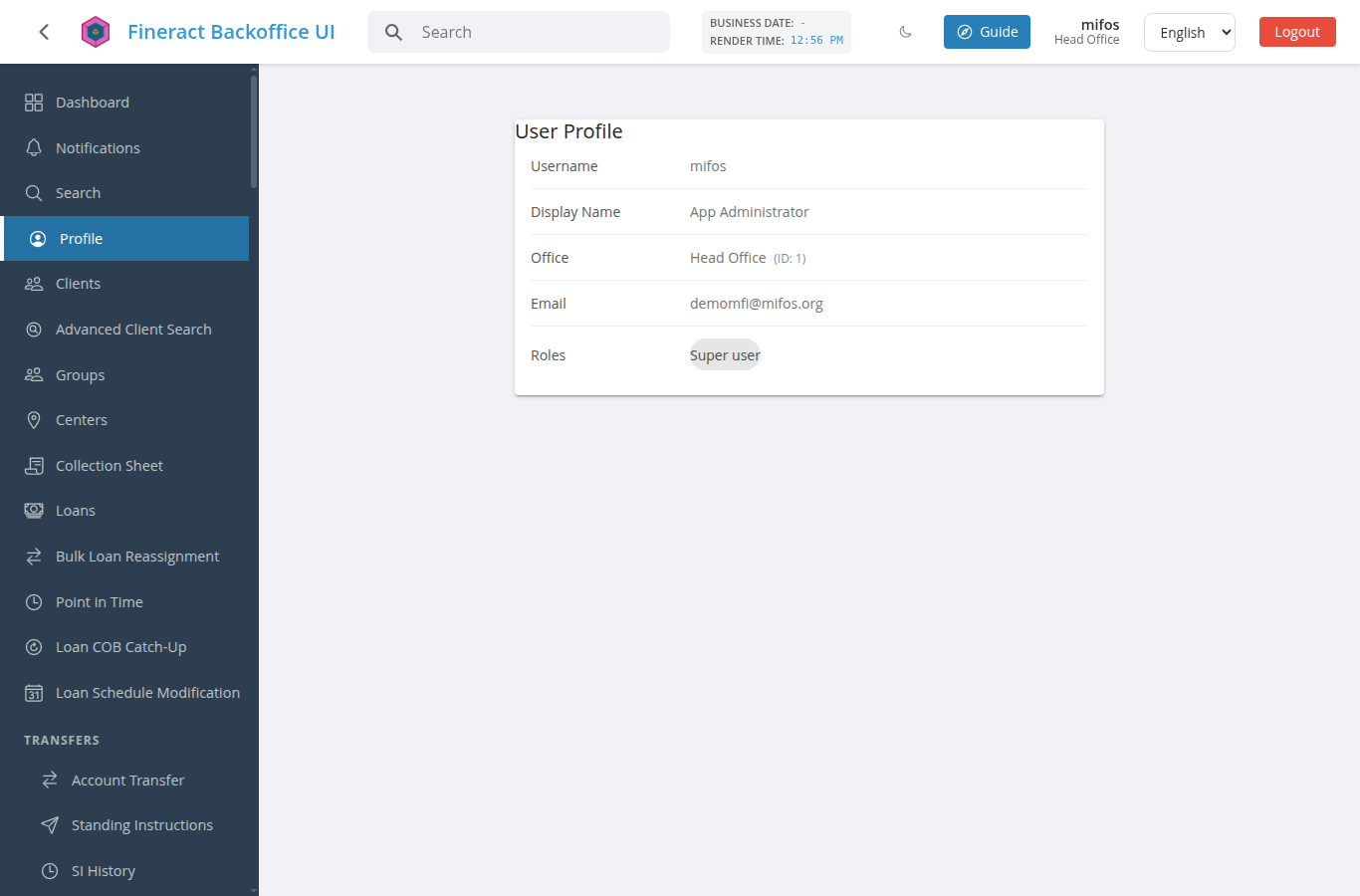
Confirmed in source — src/app/features/profile/user-profile.component.ts is a template of .detail-row spans and ion-chips with no controls of any kind.
The gap is app-wide, not just this screen
There is no change-password capability anywhere in the application:
$ grep -rln "changePassword\|change-password\|CHANGE_PASSWORD" src/app --include=*.ts
src/app/api/model/commandWrapper.ts     # generated API model only
The only hit is in generated API bindings. No component, no route, no service call. app.routes.ts:242 registers profile → UserProfileComponent and nothing else.
So a logged-in user has no way to rotate their own password, correct their email, or update any profile field. The only path is an administrator editing them through Users administration.
Why this matters for a production deployment
Password rotation is baseline security hygiene, and in many deployments it is a compliance requirement rather than a preference. Routing every password change through an administrator also means the administrator necessarily learns or sets the user's new credential, which is worse than the user setting it themselves.
The backend already supports it — PUT /users/{id} accepts password / repeatPassword, and Fineract exposes password-preference rules the UI could validate against (/system/password-preferences is already a screen in this app).
Suggested scope
- A Change Password action on
/profile opening a form with current password, new password and confirmation, validated against the tenant's configured password preferences.
- An Edit action for the self-serviceable fields (email at minimum), leaving office and roles administrator-only.
Step 1 is the one that closes the security gap and is worth doing on its own.
Environment
Verified against a clean checkout of main (a24a06ba) served with ng serve, backend sandbox.mifos.community, logged in as mifos, 1366×900, Chrome.
What happens
/profiledisplays Username, Display Name, Office, Email and Roles as static text. It has zero interactive elements:Confirmed in source —
src/app/features/profile/user-profile.component.tsis a template of.detail-rowspans andion-chips with no controls of any kind.The gap is app-wide, not just this screen
There is no change-password capability anywhere in the application:
The only hit is in generated API bindings. No component, no route, no service call.
app.routes.ts:242registersprofile→UserProfileComponentand nothing else.So a logged-in user has no way to rotate their own password, correct their email, or update any profile field. The only path is an administrator editing them through Users administration.
Why this matters for a production deployment
Password rotation is baseline security hygiene, and in many deployments it is a compliance requirement rather than a preference. Routing every password change through an administrator also means the administrator necessarily learns or sets the user's new credential, which is worse than the user setting it themselves.
The backend already supports it —
PUT /users/{id}acceptspassword/repeatPassword, and Fineract exposes password-preference rules the UI could validate against (/system/password-preferencesis already a screen in this app).Suggested scope
/profileopening a form with current password, new password and confirmation, validated against the tenant's configured password preferences.Step 1 is the one that closes the security gap and is worth doing on its own.
Environment
Verified against a clean checkout of
main(a24a06ba) served withng serve, backendsandbox.mifos.community, logged in asmifos, 1366×900, Chrome.